With the explosive growth in demand for training large-scale AI models, NVIDIA GPUs have consistently set new records for computing power-to-power consumption, pushing traditional air cooling to its physical limits. To address this challenge, NVIDIA has fully transitioned to liquid cooling solutions in its latest GB200, GB300, and even the fully liquid-cooled Rubin architectures. Within this high-performance ecosystem, liquid cooling quick-change connectors-such as OCP-compliant UQDs and NVIDIA's proprietary NVQDs-are serving as critical lifelines.
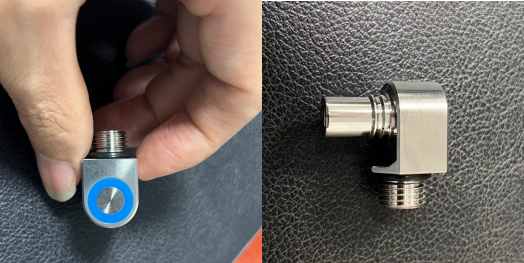
Taking the typical NVIDIA server liquid cooling architecture as an example, high-power GPU cores are covered by tightly fitted precision cooling plates. The critical link connecting these cooling plates to the cabinet-level manifold is a high-performance liquid-cooled quick-change connector. The precision metal right-angle connectors shown in the figure serve as fluid connections integrated into complex piping systems. These connectors must withstand extreme temperature variations and high-pressure conditions, with materials such as 316L stainless steel and surface treatments like electrolytic polishing designed to meet data centers' stringent requirements for high cleanliness and corrosion resistance.
In practical data center operations, the application value of quick-change connectors is particularly prominent. They support "blind insertion" and "pressurized plugging/dismounting," enabling engineers to perform hardware maintenance or replace GPU nodes without draining expensive coolant, achieving true zero leakage and hot-swapping-significantly enhancing the operational efficiency and reliability of AI factories.
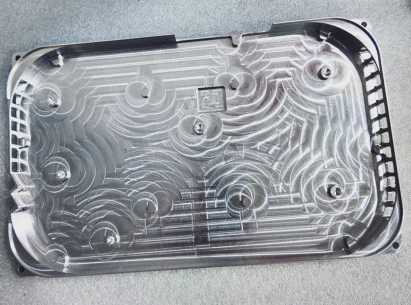
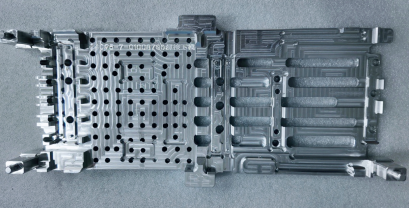
Furthermore, the extensive aluminum heat dissipation fins and die-cast metal casings depicted in the diagram are essential components of modern electronic cooling systems, widely employed in temperature control solutions for high-power-density electronic devices. Working in tandem with the core liquid cooling modules, they collectively form a robust foundation supporting the future surge in AI computing power.