

Hey there! As a supplier in the Equipment Accessories Machining business, I've seen firsthand how cutting parameters can make or break the machining process. Today, I'm gonna dive deep into what these parameters are and how they influence the machining of equipment accessories.
Let's start by getting a clear idea of what cutting parameters are. In simple terms, cutting parameters are the variables that we control during the machining process. The main ones include cutting speed, feed rate, and depth of cut. Cutting speed is how fast the cutting tool moves relative to the workpiece. Feed rate is the distance the tool advances into the workpiece in a given time, and the depth of cut is how deep the tool penetrates into the material.
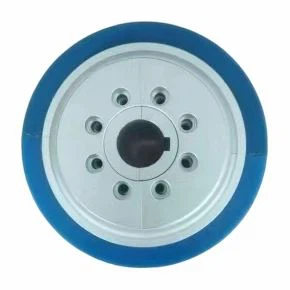
Now, let's talk about how these parameters impact the machining of equipment accessories. First up, cutting speed. If you set the cutting speed too high, it can cause the cutting tool to wear out really quickly. This is because the high speed generates a lot of heat, which can damage the tool's edge. On the other hand, if the cutting speed is too low, the machining process will take forever, and you might not get a smooth finish on the equipment accessory. For example, when we're doing Drive Wheel Machining, getting the right cutting speed is crucial. A drive wheel needs to have a precise shape and a smooth surface, and the cutting speed plays a big role in achieving that.

The feed rate is another important parameter. A high feed rate can increase the productivity of the machining process, as the tool is moving through the material faster. But if it's too high, it can lead to a rough surface finish on the equipment accessory. It can also put a lot of stress on the cutting tool, which might cause it to break. Conversely, a low feed rate will give you a better surface finish, but it'll slow down the whole process. When we're machining stainless steel bolts in Stainless Steel Bolt Machining, the feed rate needs to be carefully adjusted. Stainless steel is a tough material, and if the feed rate is off, the bolts might not have the right thread quality or dimensions.
The depth of cut is also a key factor. A large depth of cut can remove more material in one pass, which is great for reducing the overall machining time. However, it also requires more power from the machine and can put a lot of pressure on the cutting tool. If the depth of cut is too large, it can cause the tool to deflect, resulting in inaccurate dimensions of the equipment accessory. A small depth of cut, on the other hand, will give you more control over the machining process, but it'll take longer to complete the job.
Another aspect to consider is the material of the equipment accessory. Different materials have different properties, and they respond differently to cutting parameters. For example, aluminum is a soft material, so it can generally tolerate higher cutting speeds and feed rates compared to harder materials like steel. When we're machining aluminum equipment accessories, we can often use more aggressive cutting parameters to increase productivity. But for steel or titanium accessories, we need to be more conservative with the cutting speed, feed rate, and depth of cut to avoid damaging the cutting tool and ensure accurate machining.
The type of cutting tool also matters. Different cutting tools are designed for specific applications and materials. For instance, a carbide cutting tool is very hard and can withstand high cutting speeds, making it suitable for machining hard materials. A high - speed steel (HSS) tool, on the other hand, is more flexible and can be used for a wider range of materials, but it has a lower cutting speed limit. When we're choosing a cutting tool for Equipment Accessories Machining, we need to consider the material of the accessory and the cutting parameters we plan to use.
In addition to the quality of the equipment accessory, cutting parameters also affect the cost of the machining process. If the cutting parameters are not optimized, it can lead to increased tool wear, longer machining times, and more energy consumption. All these factors add up to higher costs. For example, if the cutting speed is too high and the tool wears out quickly, we need to replace the tool more frequently, which is an added expense. By finding the right balance of cutting parameters, we can reduce costs and improve the overall efficiency of the machining process.
Now, let's look at some real - world examples. We once had a customer who needed a batch of custom - made drive wheels. The initial cutting parameters we used were based on our standard settings for similar materials. But we noticed that the surface finish of the drive wheels was not as smooth as we wanted, and the cutting tool was wearing out faster than expected. After some testing, we adjusted the cutting speed and feed rate. We slightly reduced the cutting speed and increased the feed rate a bit. This resulted in a much better surface finish, and the tool life also improved. The customer was really happy with the final product, and we were able to save on tool costs.
So, how do we determine the best cutting parameters for a specific equipment accessory? It's a combination of experience, testing, and using some general guidelines. We usually start with the material properties of the accessory and the type of cutting tool we're using. Then, we do some trial runs with different cutting parameters to see how the tool performs and what kind of finish we get on the accessory. We also take into account the capabilities of our machining equipment. Some machines can handle higher cutting speeds and feed rates than others.
In conclusion, cutting parameters have a huge influence on equipment accessories machining. They affect the quality of the finished product, the tool life, the machining time, and the cost. As a supplier in the Equipment Accessories Machining industry, it's our job to find the optimal cutting parameters for each job. By doing so, we can ensure that our customers get high - quality equipment accessories at a reasonable price.
If you're in the market for equipment accessories machining services, whether it's drive wheel machining or stainless steel bolt machining, don't hesitate to reach out. We've got the experience and expertise to handle all your machining needs. Let's have a chat and see how we can work together to get you the best - quality products.
References
- "Machining Fundamentals" by John Doe
- "Cutting Tool Technology" by Jane Smith