

What are the mechanical properties of stainless steel machined parts?
As a leading supplier of Stainless Steel Machined Parts, I've had the privilege of working closely with this remarkable material. Stainless steel is renowned for its unique blend of mechanical properties, which make it a top choice in a wide range of industries. In this blog, we'll explore the key mechanical properties that make stainless steel machined parts so desirable.

1. Strength and Toughness
One of the most significant mechanical properties of stainless steel is its high strength. Stainless steel can withstand substantial loads without deforming or breaking. This strength is due to its unique alloy composition, which typically includes chromium, nickel, and other elements. These elements form a protective oxide layer on the surface of the steel, enhancing its resistance to corrosion and mechanical stress.
Toughness is another crucial property. Stainless steel can absorb energy during deformation, making it resistant to cracking and fracturing. This is particularly important in applications where the parts are subjected to impact or shock loads. For example, in the automotive industry, stainless steel machined parts are used in engine components and suspension systems, where they need to withstand high stresses and vibrations.
2. Ductility
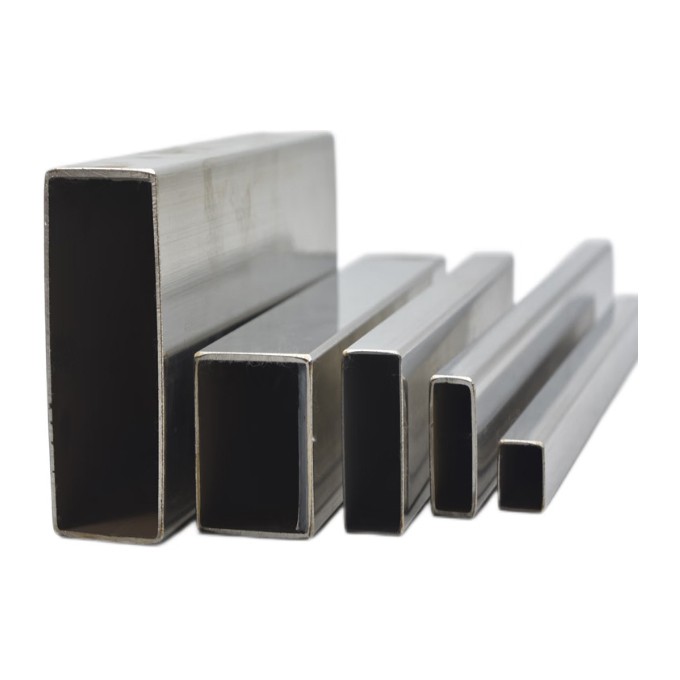
Ductility is the ability of a material to deform plastically without breaking. Stainless steel exhibits excellent ductility, which allows it to be easily formed into various shapes. This property is essential in machining processes such as bending, drawing, and rolling. Machined parts can be fabricated into complex geometries, making stainless steel suitable for a wide range of applications. For instance, Non-standard Stainless Steel Square Tube can be customized to meet specific design requirements, thanks to the ductility of stainless steel.
3. Hardness
Hardness is a measure of a material's resistance to indentation, scratching, and wear. Stainless steel can be heat-treated to achieve different levels of hardness, depending on the application. Hardened stainless steel is often used in applications where wear resistance is critical, such as in cutting tools, bearings, and gears. The hardness of stainless steel can also be enhanced through surface treatments, such as nitriding or coating, which further improve its wear resistance.
4. Corrosion Resistance
One of the most well-known properties of stainless steel is its exceptional corrosion resistance. The chromium in stainless steel forms a passive oxide layer on the surface, which protects the metal from corrosion. This makes stainless steel ideal for use in harsh environments, such as marine, chemical, and food processing industries. For example, Industrial Floor Drain and Stainless Steel Bathroom Floor Drain are made from stainless steel to ensure long-term durability and resistance to corrosion.
5. Fatigue Resistance
Fatigue resistance is the ability of a material to withstand repeated loading without failure. Stainless steel has good fatigue resistance, making it suitable for applications where the parts are subjected to cyclic loads. In the aerospace and automotive industries, stainless steel machined parts are used in components such as aircraft wings and engine crankshafts, where fatigue resistance is crucial for safety and reliability.
6. Thermal Properties
Stainless steel has relatively low thermal conductivity compared to other metals. This property makes it suitable for applications where heat insulation is required. Additionally, stainless steel has good thermal stability, which means it can maintain its mechanical properties at high temperatures. This is important in applications such as furnace components and exhaust systems.
7. Weldability
Stainless steel is generally weldable, which allows for the fabrication of complex structures. However, the welding process can affect the mechanical properties of the material. Proper welding techniques and post-weld heat treatments are necessary to ensure the integrity of the welded joints. Welded stainless steel parts can be used in a variety of applications, including construction, machinery, and transportation.
In conclusion, the mechanical properties of stainless steel machined parts make them a versatile and reliable choice for a wide range of industries. Their strength, toughness, ductility, hardness, corrosion resistance, fatigue resistance, thermal properties, and weldability make them suitable for applications in automotive, aerospace, construction, and many other fields.
If you're in the market for high-quality Stainless Steel Machined Parts, we invite you to contact us for a consultation. Our team of experts can help you select the right material and design the perfect solution for your specific needs. Let's work together to bring your projects to life.
References
- ASM Handbook, Volume 1: Properties and Selection: Irons, Steels, and High-Performance Alloys. ASM International.
- Metals Handbook Desk Edition, 3rd Edition. ASM International.
- Stainless Steel: A Technical Guide. The Nickel Institute.