

As a seasoned supplier in the field of Stainless Steel Accessory Machining, I'm excited to share insights into the common machining operations for stainless steel accessories. Stainless steel is a popular choice for accessories due to its excellent corrosion resistance, high strength, and aesthetic appeal. In this blog, we'll delve into the key machining processes used to transform stainless steel into high - quality accessories.
Turning
Turning is one of the most fundamental machining operations for stainless steel accessories. It involves rotating a stainless steel workpiece on a lathe while a cutting tool removes material from the outer surface of the workpiece. This process is ideal for creating cylindrical shapes such as shafts, pins, and sleeves.
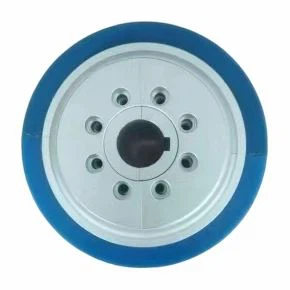
In a turning operation, the cutting tool is precisely controlled to remove material at a specific depth and feed rate. The choice of cutting tool is crucial. Carbide - based cutting tools are commonly used for turning stainless steel because they can withstand the high heat generated during the cutting process and maintain their sharpness. For example, when machining a drive wheel, turning is used to create the outer diameter of the wheel to the required precision. You can learn more about Drive Wheel Machining.
Milling
Milling is another important machining operation for stainless steel accessories. Unlike turning, which rotates the workpiece, milling uses a rotating cutting tool to remove material from the workpiece. Milling can be used to create a variety of shapes, including flat surfaces, slots, and holes.
There are two main types of milling: face milling and peripheral milling. Face milling is used to create flat surfaces on the workpiece, while peripheral milling is used to cut along the edges of the workpiece. When milling stainless steel, it's important to use appropriate cutting parameters to avoid work - hardening. Work - hardening can make the stainless steel more difficult to machine and can reduce the tool life. For equipment accessories that require complex shapes and features, milling is a go - to process. Check out Equipment Accessories Machining for more details.
Drilling
Drilling is the process of creating holes in stainless steel accessories. It is a common operation in many manufacturing processes. When drilling stainless steel, the drill bit needs to be carefully selected. High - speed steel (HSS) drill bits can be used for general drilling, but for more demanding applications, carbide - tipped drill bits are preferred.
The drill bit must penetrate the hard stainless steel surface without causing excessive heat. This is achieved by using proper cutting speeds and feeds, as well as applying cutting fluid to cool the drill bit and reduce friction. For example, in the production of stainless steel locating pins, drilling is used to create holes for assembly or alignment purposes. You can find more information about Stainless Steel Locating Pin Machining.
Grinding
Grinding is a finishing operation used to achieve high - precision dimensions and a smooth surface finish on stainless steel accessories. It involves using an abrasive wheel to remove small amounts of material from the workpiece. Grinding can be used to improve the flatness, roundness, and surface roughness of the accessory.
There are different types of grinding operations, such as surface grinding, cylindrical grinding, and centerless grinding. Surface grinding is used to create flat surfaces, while cylindrical grinding is used for round workpieces. Centerless grinding is particularly useful for high - volume production of small, round parts. Grinding stainless steel requires careful control of the grinding parameters to prevent over - heating and damage to the workpiece.
Boring
Boring is a machining operation used to enlarge existing holes or to create holes with high precision. It is often used after drilling to achieve the desired hole size and surface finish. In a boring operation, a single - point cutting tool is used to remove material from the inside of the hole.
The boring process can be performed on a lathe or a boring machine. When boring stainless steel, it's important to use a rigid setup and appropriate cutting tools to ensure accuracy and surface quality. Boring is commonly used in the production of stainless steel components that require precise internal diameters, such as bearings and bushings.
Threading
Threading is the process of creating screw threads on a stainless steel workpiece. There are two main methods of threading: cutting and rolling. Cutting threading involves using a threading tool to cut the threads into the workpiece. This method is suitable for creating threads on small - diameter workpieces or when a high - precision thread is required.
Rolling threading, on the other hand, uses a set of dies to roll the threads onto the workpiece. This method is more efficient and can produce stronger threads. Threading is an essential operation in the production of stainless steel fasteners, such as bolts and nuts.

Challenges in Machining Stainless Steel Accessories
While machining stainless steel offers many benefits, it also presents some challenges. Stainless steel has a tendency to work - harden during machining, which can lead to increased cutting forces, tool wear, and poor surface finish. Additionally, stainless steel has a relatively low thermal conductivity, which means that heat generated during machining can accumulate in the cutting zone, causing the cutting tool to wear out quickly.
To overcome these challenges, it's important to use the right cutting tools, cutting parameters, and cutting fluids. Carbide - based cutting tools with appropriate coatings can help reduce tool wear. Using lower cutting speeds and higher feed rates can also help prevent work - hardening. Cutting fluids play a crucial role in cooling the cutting zone and reducing friction.
Quality Control in Stainless Steel Accessory Machining
Quality control is of utmost importance in the production of stainless steel accessories. After each machining operation, the workpiece should be inspected to ensure that it meets the required specifications. This can involve using measuring tools such as calipers, micrometers, and coordinate measuring machines (CMMs).
Visual inspection is also important to detect any surface defects, such as cracks or scratches. Non - destructive testing methods, such as ultrasonic testing and magnetic particle testing, can be used to detect internal defects in the stainless steel. By implementing a strict quality control system, we can ensure that our customers receive high - quality stainless steel accessories.
Conclusion
In conclusion, machining stainless steel accessories involves a variety of operations, including turning, milling, drilling, grinding, boring, and threading. Each operation has its own unique requirements and challenges. As a Stainless Steel Accessory Machining supplier, we have the expertise and experience to handle these challenges and produce high - quality stainless steel accessories.
If you are in the market for stainless steel accessories or have specific machining requirements, we are here to help. Our team of experts can work with you to understand your needs and provide customized solutions. Contact us today to discuss your procurement needs and start a fruitful business partnership.
References
- Kalpakjian, S., & Schmid, S. R. (2013). Manufacturing Engineering and Technology. Pearson.
- ASM Handbook Committee. (1998). ASM Handbook, Volume 16: Machining. ASM International.